We use cookies and similar technologies on our digital services. Some are essential for their operation, while others help us understand usage patterns to ensure quality and enhance the user experience. With your consent, we may also use cookies to optimize advertising. Click 'Manage Cookie Preferences' to adjust your settings.
The Clean Technology Investment Tax Credit: Canada’s 30% Commercial Solar Incentive
If you own or manage a business in Western Canada, you have likely experienced the volatility of your electricity bills. In a deregulated market like Alberta, this is especially true. Price swings and climbing rates are a permanent challenge. While many companies look for different ways to cut consumption, few are fully leveraging the federal incentives developed to offset the cost of generating your own electricity. This guide will break down the Clean Technology Investment Tax Credit (CT ITC), which gives Canadian businesses a 30% refundable cash incentive, and explain how it stacks with local market advantages to increase the ROI of commercial solar.
This program is called the Clean Technology Investment Tax Credit, or CT ITC. When you pair this credit with Alberta and BC’s abundant sunshine and a system lifespan of 30+ years, making the switch to solar is no longer just an environmental choice. It becomes a strategic financial decision to protect your business margins.
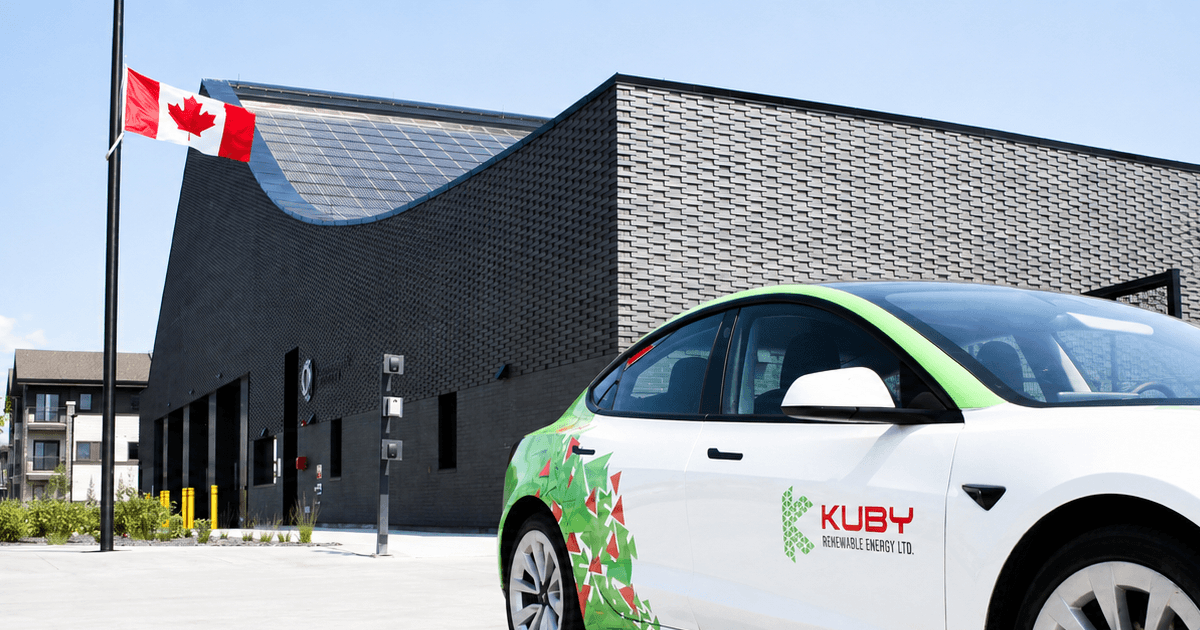
This article showcases a real world installation from BC, but is applicable to Alberta and other Canadian businesses (with the exception of the outlined BC Hydro-specific rebates).
To help you determine if solar is the right strategic move for your business we’ll layout the financial and operational fundamentals:
Western Canada’s Grid Volatility: Why rising industrial demand, grid upgrades, and electrification mean commercial electricity rates are climbing.
The Clean Technology Investment Tax Credit: How this federal program provides your business with a refundable 30% cash refund rather than a basic tax write-off.
The Power of a Refundable Credit: Why your business receives the full cash value of the incentive even in a low-tax or break-even fiscal year.
Stacking Incentives: How to combine the 30% credit with federal Capital Cost Allowance (CCA) rules and BC Hydro commercial solar incentives to maximize your front-loaded tax savings.
A Realistic Look at Solar ROI: Two case study investigations for commercial systems in Alberta and BC using real numbers.
Regional Solar Advantages: How local factors, like BC’s PST exemption and unique net-metering programs accelerate your returns.
The Expiration Timelines: Why the timing of your installation matters for securing the best tax rates and write-offs.
Answers to Common FAQ’s: Real advice on lease structures, weather performance and system maintenance.
What is Driving Up Commercial Electricity Costs?
Before looking at solar technology, it helps to look at the specific energy problems commercial operations face in Western Canada.
In Alberta, a deregulated market means businesses may be exposed to price swings. Floating rates hit a record high of 37.46¢/kWh in late 2022, and while the market has settled since then, the long-term trend is still moving upward. Looking forward, the Alberta Electric Systems Operator AESO is predicting wholesale pool prices may jump to nearly 18¢/kWh by 2042, a cost that does not even include delivery, transmission, and administrative fees.
Meanwhile, BC’s regulated rate structures are facing steady increases to fund grid expansion in a province that has constrained new power generation capabilities.
Managing a commercial budget around these unpredictable rising costs is extremely difficult. Energy is not an optional expense. When rates spike, profit margins take a hit. Between the expanding industrial demand, grid modernization, and electrification gaining popularity, upward pressure on electricity prices is built right into the system.
Installing an on-site solar array changes this dynamic. It takes an unpredictable variable cost and converts it into a fixed expense that you fully control. The power your solar system generates belongs to your business at a fixed, known cost for the next 30+ years.
How the Clean Technology ITC Works
The Clean Technology Investment Tax Credit, or CT ITC, is a federal incentive program built to reduce the upfront cost of corporate clean energy transitions. For taxable Canadian businesses, it acts as a refundable tax credit that covers up to 30% of the total capital cost of an eligible commercial solar installation.
The cost of commercial solar can vary quite a bit depending on system size. To see how that percentage directly lowers your initial capital outlay, here is how the credit applies across different project sizes:
Installation Cost (Excl. GST)
ITC Credit (30%)
Your Net Cost
$150,000
$45,000
$105,000
$300,000
$90,000
$210,000
$500,000
$150,000
$350,000
It is important to know that this is not a government loan or a complex tax write off. The CT ITC is a true cash refund that applies directly to your corporate tax return. If your business owes zero income tax during the fiscal year, the credit is not lost. The federal government will pay the remaining balance directly to your business via cheque or direct deposit.
Key Details at a Glance:
Corporate Eligibility: The credit is available to taxable Canadian corporations. This includes corporate members of partnerships and Real Estate Investment Trusts, or REITs.
Technology Covered: The incentive is directly applied to solar PV installations, battery storage systems, and active solar heating.
Asset Status: The system must be brand-new and permanently installed within Canada to be eligible for the incentive program. Used or refurbished equipment does not qualify.
The 30% Window: The full 30% rate is valid for eligible systems placed in service between March 28th, 2023, and December 31, 2033.
The Phase-Out: The incentive rate drops to 15% in 2034 and is completely eliminated after December 31, 2034.
Labour Requirements: Getting the full 30% refund relies on your contractor following specific federal wage and apprenticeship rules during the build. Your solar contractor must meet certain labour requirements for prevailing wages and apprentice involvement; this is often what the closest electrical union has negotiated in their latest collective bargaining agreement.
If these labour standards are missed, your credit rate drops to 20%. This is why it is important to work with an installer who guarantees compliance from day one. Solar by Kuby has completed dozens of ITC projects and has always hit the 30% threshold.
Why the Refundable Part of the ITC Matters
Cash refunds from the government are not common. Most tax programs only reduce the amount of income tax your business owes at the end of the year. If you have a low-tax year or a break-even year, those traditional incentives do not do much to help your immediate cash flow. The Clean Technology ITC is different because it is a fully refundable credit.
Here is what that means for your business:
If your business owes taxes: The credit for your project is applied directly against your balance to lower or completely remove your tax bill. If your credit is worth more than the amount you owe, the remaining balance is paid out to you in cash.
If your business has a low-tax or no-tax year: You still get the exact same financial benefit. The entire credit amount is refunded to you as a cash payment. You do not have to carry the credit forward on your books or wait for a highly profitable year to unlock that capital.
This refundable setup means the ITC provides real, tangible value to basically every eligible business, regardless of whether you are highly profitable or currently managing a tight cash flow. In simple terms, it acts less like a complex tax write-off and more like a direct cash rebate on your equipment purchases.
Maximizing Your Returns with Stacked Incentives
Accelerated Depreciation
The Clean Technology ITC becomes even more powerful when you pair it with the federal Capital Cost Allowance, or CCA. The CCA program lets Canadian businesses write off clean energy equipment at a much faster rate than standard commercial assets.
Under federal tax rules, qualifying commercial solar equipment placed in service before 2030 is eligible for a 100% immediate expense in year one.
This provides a major upfront tax benefit. Instead of slowly claiming smaller deductions over ten years or more, your business can write off the entire eligible cost of the system right away. This directly reduces your corporate taxable income during the exact fiscal year you made the purchase, keeping crucial capital inside your operational budget.
BC Hydro Incentives
BC Hydro has been a key proponent for solar power and battery energy storage systems in recent years.
Larger businesses that can install more than 100kW can take this one step further and take advantage of Load Displacement incentives. BC Hydro’s calculations are issued on a case-by-case basis depending on the ROI of the project and impact the system will have on the grid. Typical Load Displacement Incentives may be approximately $0.45/kWh per kWh of load that is displaced in year 1 or roughly ¼ to ½ of project costs.
Part of the incentive includes a feasibility study to see if a solar power system is viable on your property. The costs for the study are either 50% or 100% covered depending on how much load you displace. That is, what percentage of kWh’s you will no longer be importing from the grid because the solar energy feeds the building directly.
How to Sequence the Incentives
The math is straightforward, but the rules are strict. You are not allowed to double dip by claiming the same dollar twice. The 30% portion of the system covered by the ITC (and Load Displacement Incentive, if applicable) reduces the remaining asset value you can claim under the CCA.
However, the two incentives do work together on the remaining 70% of the project cost. Because of these sequencing rules, we highly recommend working with a qualified corporate tax professional to structure your filing and ensure you can claim the maximum amount possible.
What Does the ROI Look Like in Alberta?
Fortunately, Alberta offers ideal conditions for commercial solar installations. Because the province receives nearly 2,300 hours of annual sunshine, the regional economics are very strong.
On average, Alberta commercial solar installations range from $1.25 to $2.50 per watt, depending on total array size and the specific structural factors of the site. To demonstrate how the federal tax credit changes the financial equation, let’s look at a typical small or mid-scale corporate facility:
Case Study: 150 kW Rooftop System on an Alberta Commercial Building
Kuby has used real numbers from an installed project, but rounded all values for ease of reading.
Financial Metric
Baseline (Without Incentives)
Accelerated (With 30% ITC + Immediate Expensing)
System Size
150 kW
150 kW
Gross Capital Cost
$300,000
$300,000
Clean Technology ITC Credit
N/A
$90,000
Carbon by Kuby Credit
$20,000
Net Cost to Business
$300,000
$190,000
Projected Annual Utility Savings
$25,000 - $40,000
$25,000 - $40,000
Estimated Payback Period
8-12 years
4-7 years
IRR
10% - 18%
15% - 25%
Asset Lifespan
30+ years
30+ years
Once you pass that initial 4 to 7 year payback window, the system generates low-cost power for another 20+ years. As grid electricity rates continue to trend upward, producing your own power acts as a direct financial hedge against future energy inflation.
What does the ROI Look Like in BC?
British Columbia offers excellent fundamentals for commercial solar installations. The combination of 7% PST exemption for qualifying solar equipment,rising commercial utility rates, and current funding opportunities for solar and storage make the economic opportunities for on-site solar generation and battery storage very strong throughout the province.
On average, commercial solar installations in BC range from $1.25 to $2.50 per watt, depending on total array size, electrical service capacity, and physical roof variables. To demonstrate how the federal tax credit changes the financial equation, let’s look at a large-scale corporate facility in BC:
Case Study: 1,000 kW Rooftop System on a BC Warehouse
Kuby has used real numbers from an installed project, but rounded all values for ease of reading.
Financial Metric
Baseline (Without ITC)
Accelerated (With 30% ITC + Immediate Expensing)
System Size
1,000 kW
1,000 kW
Gross Capital Cost
$1,250,000
$1,250,000
Clean Technology ITC Credit
N/A
$375,000
Load Displacement Incentive
N/A
$325,000
Input Tax Credits
5% GST Saved
5% GST Saved
Net Cost to Business
$1,250,000
$550,000
Projected Annual Utility Savings
$20,000 - $35,000
$70,000 - $100,000
Estimated Payback Period
8-16 years
4-7 years
Asset Lifespan
30+ years
30+ years
Stacking the 30% tax credit cuts your payback window down to as little as 2-4 years, unlocking 25+ years of clean, predictable power that protects your operation from grid price increases.
Alberta Advantage for Businesses Going Solar
Even without the 30% federal tax credit, local market conditions in Western Canada create an exceptionally strong baseline for commercial solar returns. Here is why operating in Alberta provides a distinct operational advantage:
Exceptional Solar Resources: With over 2,300 hours of annual sunshine, Alberta’s solar potential competes with some of the best generation regions in North America.
No Provincial Sales Tax: Zero PST on our solar infrastructure results in lower capital expenditures and a cleaner balance sheet on day one.
Cold Climate Performance: Solar technology performs better in lower temperatures. Alberta’s combination of cold, clear days create optimal conditions for photovoltaic generation.
Flexible Solar Retail Rates: Thanks to Alberta’s deregulated energy market, micro-generators can leverage specialized seasonal solar programs (e.g. Solar Club Rates). Retailers allow you to switch to premium export rates, up to 35¢/kWh, so you can get the most value for the surplus power you send back to the grid during peak production season (April - September).
Why Timing Matters for Your Solar Investment
While the current tax incentives are significant, they are temporary by design. Both the 30% cash credit and the accelerated write-off rules have established expiration dates. Here is how the Clean Tech ITC phase-out works:
Full 30% Rate: Applies to all qualifying systems placed in service before December 31, 2033.
Reduced 15% Rate: Applies to systems that go operational during the 2034 calendar year.
Program Termination: No federal credit is available for systems completed after 2034.
Tax write-offs through the Capital Cost Allowance are also tied to project timing. Under updated federal rules, businesses can take advantage of 100% immediate first-year expensing for systems installed before 2030.
If your business is evaluating capital upgrades, aligning your solar installation with these active incentive windows allows you to maximize upfront cash recovery and shield current corporate income.
Common FAQ’s
“We lease our building. Can we still benefit? Yes, as long as your corporation owns the solar equipment itself, you do not need to own the real estate, the business claiming the CT ITC must own the physical solar hardware. Many commercial tenants structure agreements with their landlords to install solar on leased roofs, which lowers operating costs while increasing the overall property value making it a win-win for both tenants and landlords.
“What if government policies change in the future?” Your tax credit rate is locked in based on your system’s “placed-in-service” date. Because the CT ITC is enacted federal law, future policy shifts will not retroactively alter the tax credit on an operational system you have already claimed.
“Do solar panels actually perform during cold Canadian winters?” Solar hardware performs very well in cold weather. Photovoltaic cells operate more efficiently in freezing temperatures than in hot summer heat. Combined with bright winter days and panels designed to shed snow quickly, commercial arrays continue generating reliable power through the winter months.
Want a deeper dive into cold-weather performance? Check out our article: Solar Panels in Winter.
“What are the ongoing maintenance requirements?” Ongoing maintenance is minimal. Modern Tier-1 commercial solar panels come backed by 25-year performance warranties and experience an average annual degradation rate of less than 0.5%. Because solar PV systems have no moving parts, routine maintenance typically consists of periodic cleaning and a quick annual checkup, allowing the system to operate reliably on its own.
The Takeaway
The CT ITC fundamentally changes the math on commercial solar by injecting 30% of your equipment costs back into your cash flow. When you pair that cash refund with first-year tax write-offs, the financial return on a commercial solar array becomes a compelling business strategy. You do not need an ESG mandate to take advantage of this program. It is simply a smart financial mechanism to eliminate unpredictable energy bills and let federal tax incentives fund a long-term asset.
Moving forward while the 30% incentive is active allows your business to lock in:
Direct Cash Returns: Up to a 30% refund on your total capital expenditure.
Cost Stability: Decades of predictable, low-cost power production.
Immediate Tax Relief: Substantial first-year write-offs to protect your current corporate income.
Energy Independence: Protection against future rate hikes from the provincial power grid.
Reduced Operating Cost: Increase annual margins by reducing a major utility line item
Because these incentives rates step down over time, timing your project matters. Taking action today ensures you capture the highest possible return on your investment.
Want to explore the numbers for your property? Contact us today to request a custom financial assessment and learn how to maximize your tax recovery with a qualified advisor.
Disclaimer: This article is intended for informational purposes only and should not be taken as formal tax or legal advice. Program rules and eligibility criteria may change over time. Please consult a professional accountant or tax specialist to review your situation.
Go Solar Today
Save money. Become independent. Protect the environment.



.svg)


.svg)
.svg)


.svg)

.svg)

.jpg)



.svg)
.svg)

